Chapter 3: Camera Settings, ISO
ISO
The ISO film speed standardscale was retained for digital cameras,cameras. even though light sensitivity is now determined by the camera's computer software and light sensor hardware, rather than the chemical composition of film.
When you change the ISO value on a DSLR, you maycan think of it as swapping out a physical roll ofchanging film andto replacing it with a new roll that issomething more sensitive or less light sensitive to light.what
Onecurrently in the camera. A big advantage of a digital camera is that you can change the ISO with the press of a button and from shot to shot, instead of only when you change theper roll of film.
This short video shows how to set ISO on the Canon EOS 5D Mk IV.
Here are some important things to know about camera ISO:
HigherFor ISO numbers area more suitablein fordepth darkexplanation, environments but makevisit the imagePhotography grainier.Basics Chapter
Lower ISO numbers are more suitable for bright environments and the image will usually be less grainy.
ISO 100: Suitable for a bright, sunny day
ISO 800: Suitable for indoor spaces when not using a flash
ISO 1600+: Suitable for dim or dark environments (but the picture will be increasingly grainy looking)
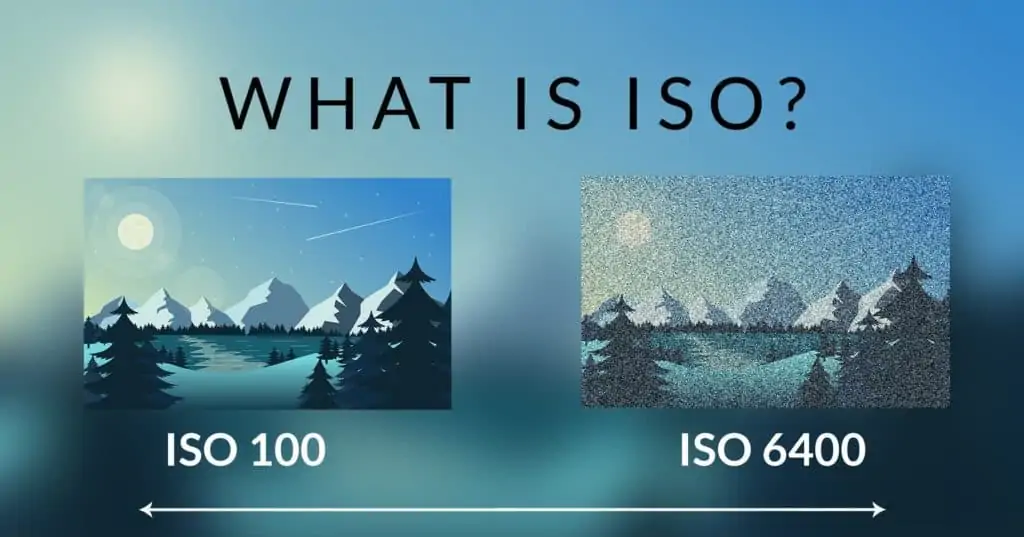
In the diagram below, note how the higher ISO number produces a much lighter, but also much grainier image.