
Soldering Equipment
Equipment
- Soldering station/tips
- Solder
- Tip cleaner (cleaning ball or sponge)
- Flux
- Solder wick
- Something to hold your project in place
- Flush cutters
- Fume mitigation
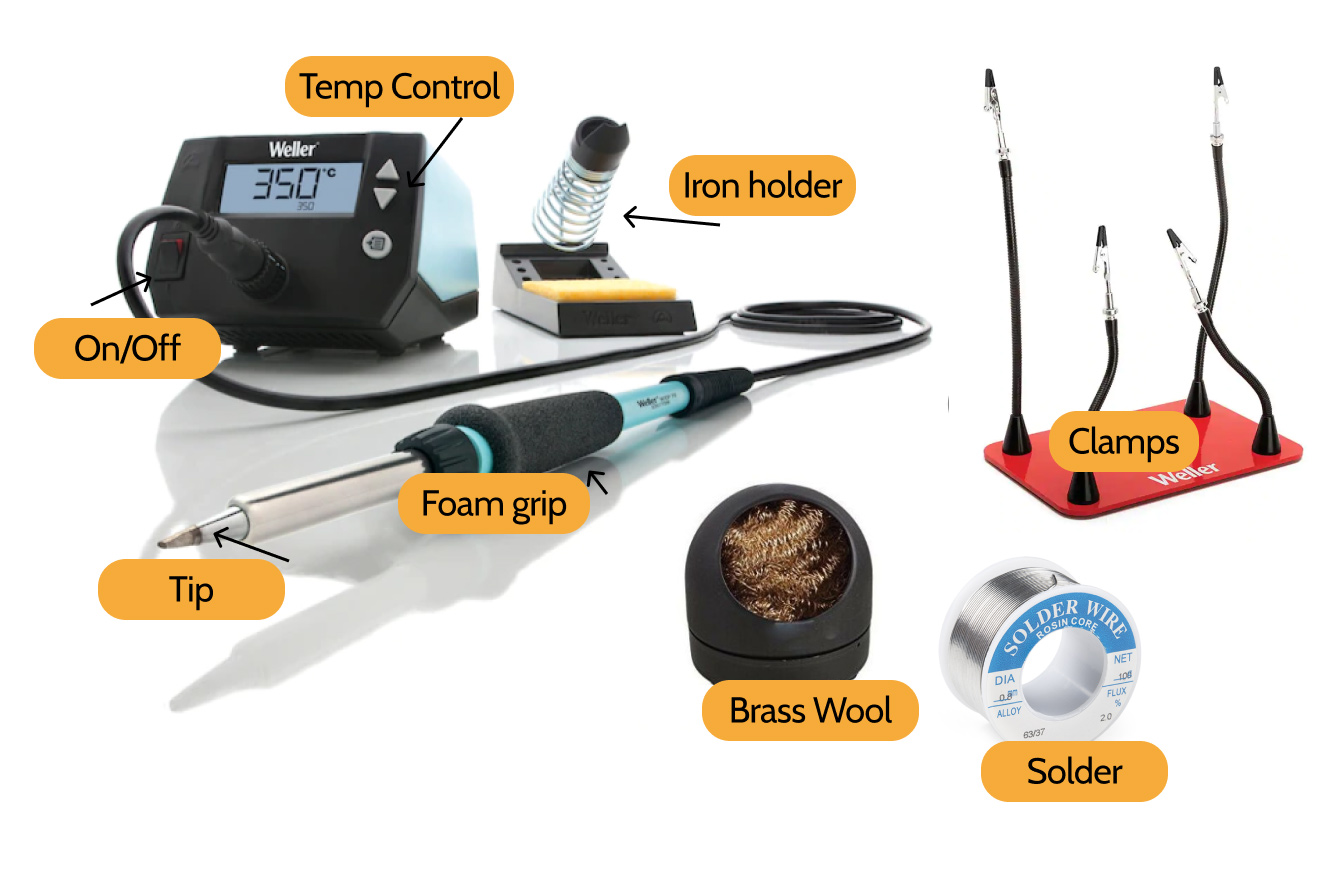
Soldering Irons and Soldering Stations
A soldering iron is the fundamental piece of handheld equipment used in the process of soldering. Soldering irons heat up to melt solder around electrical or mechanical connections; as it melts, solder flows into the spaces between and around two components. Once bonded, the solder is left to cool and harden, creating a permanent and conductive join; it can melt back into liquid form by reheating enough the join. The process of reheating and separating a previously soldered joint is called desoldering.
Brass and Conventional Sponges
Use either a wet sponge or a brass sponge to remove debris from the tip of the soldering iron. This will help keep soldering iron tips clean by removing oxidation (oxidated tips will get black and not accept solder). Brass sponges removes debris in tips better; they have a smaller thermal shock and they don't need water as conventional sponges.
Solder
Solder is a metal alloy that melts to create a permanent bond between electrical parts or components. Solder comes in both lead and lead-free presentations, also in different diameters; the most common diameters used are 0.8mm and 1.5mm. Inside the solder core a material known as flux helps improve electrical contact and mechanical strength of solder.
Helping Hands/Clamps
A helping hand/clamps, also called "third hand," is a device that can assist you while soldering by holding the parts or components you are trying to solder, leaving your hands free to work.